Introduction
I remember a late shift in a small workshop where the glow from a laser felt like the future—until the air turned heavy and people started coughing. In that same kind of room, a good laser marking fume extractor can cut visible haze and odor quickly; yet too many shops still rely on ductless fans and wishful thinking. Data tells us that poorly treated fumes increase absenteeism and lower yield—sometimes by double digits—so what should you really look for when you buy (and yes, I’ve learned this the hard way)? I’ll walk you through the practical parts, the techy bits, and the mistakes we made the first time. Let’s get into the details that matter next.
Part 2 — What Most Solutions Miss: Hidden Pain Points
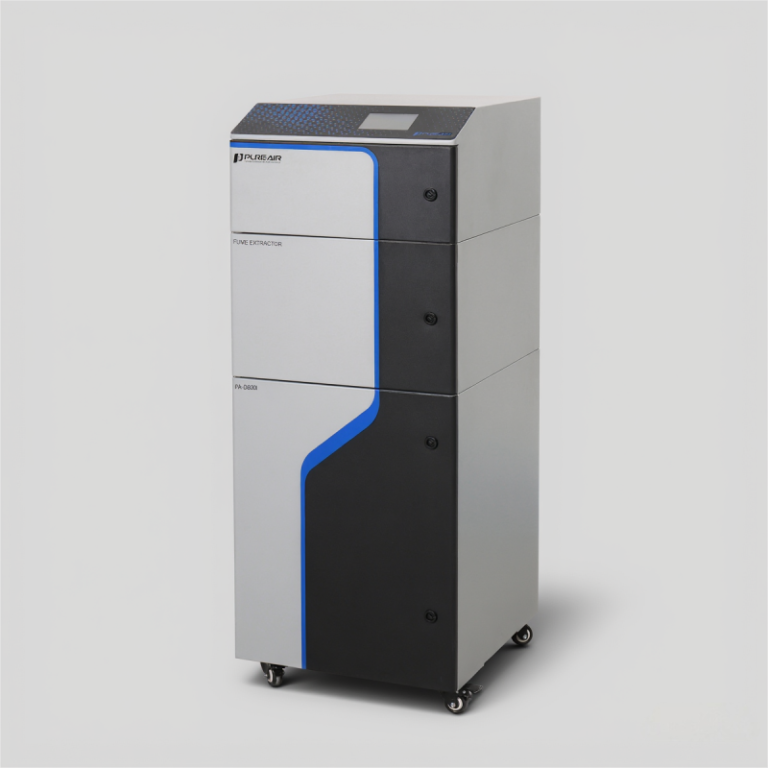
laser printer fume extractor is often sold as a fix-all, but here’s the blunt truth: many units treat smell and sight, not chemistry. I’ve seen shops equip a bench with a standard unit and assume volatile organic compounds are solved. They are not. Filters that trap particles do little against gaseous byproducts from plastics or coatings. That mismatch—between what the machine captures and what the process emits—is the root of many regrets.
Why do filters fail?
Technically, particle capture and gas adsorption are different beasts. HEPA filters are great for particulates; activated carbon adsorption handles VOCs. But if the extractor has low airflow rate or poor sealing, neither will perform. Add aging power converters that reduce fan speed and edge computing nodes that aren’t tuned to monitor actual contaminant levels, and you have a system that looks fine on paper but fails in practice. Look, it’s simpler than you think: match the filter media to your fumes and keep an eye on airflow and maintenance intervals.
Part 3 — What Comes Next: Principles and Practical Choices
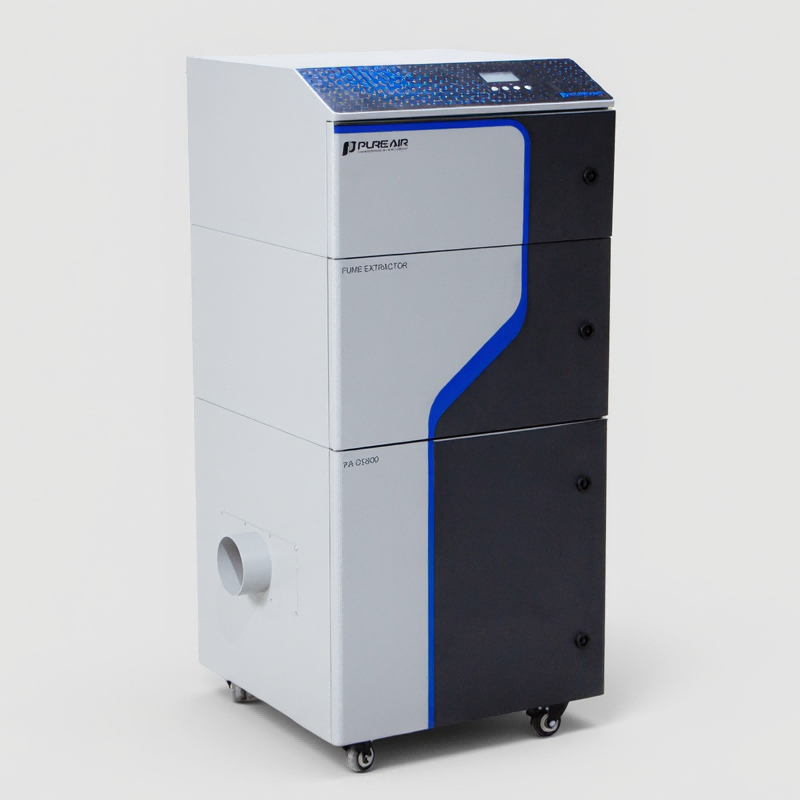
Moving forward, I focus on new technology principles that actually change outcomes. Rather than treating extractors as passive boxes, modern designs combine active sensing with targeted media. For example, integrated sensors can detect spikes in VOCs and trigger a bypass to a higher-capacity activated carbon bed. I’ve watched systems shift in real time—fans ramp, filters re-route, and air quality stabilizes within minutes. (— funny how that works, right?)
What’s Next for workshops?
Here’s what I now recommend after testing several setups: choose systems with modular filter stacks, real-time sensors, and clear maintenance alerts. A modular design lets you swap in a specialized catalyst or a UV photolysis cell when you change materials. Real-time data—from simple ppm sensors to more advanced edge computing nodes—lets you stop problems before they become health issues. And practical things—easy access to replace carbon media, clear service logs—cut downtime. I link back again: consider a laser printer fume extractor that supports these upgrades if you’re planning to scale or diversify your marking substrates.
Closing: How I Evaluate Extractors (Three Metrics I Trust)
I want you to leave with a usable checklist—because I’ve bought the wrong unit more than once and learned from it. Here are three evaluation metrics I always use:
1) Capture Efficiency by Particle Size and VOC Type — Ask for third-party test data showing removal rates for both particulates and gases. Don’t accept vague claims. 2) Usable Airflow and Pressure Drop — Measure real airflow at the intake with filters in place. The spec sheet fan speed is worthless if pressure drop chokes it. 3) Serviceability and Expandability — Can you swap media quickly? Is there room for a catalytic cell or added activated carbon? Can the unit report filter saturation? These practical checks tell you whether a unit will survive shop life.
I’m not sponsoring products here; I’m sharing what I’d buy again based on hard lessons, small wins, and a few late nights tuning systems. If you want a device that actually improves air and keeps operators healthy, prioritize measurable performance over shiny features. For a tested line that covers many of these bases, check out PURE-AIR—they won’t do the work for you, but they make good tools for serious teams.
Leave a Reply